Before you click further: the whole story of Mallorca
Mallorca is more than the largest of the Balearic Islands. Romans built roads here, Moors laid the foundations of Palma's old town, and in the mountains above Valldemossa a Polish composer once spent a winter that nearly cost him his life — long before a single beach bar existed. Want the whole story, with all the history, myths and traditions that give this island its character?
From Romans to Moors
Mallorca got its Latin name — Maiorica, "the larger one" (compared to smaller Minorca) — when the Roman general Quintus Caecilius Metellus conquered the island in 123 BC, reportedly bombarding the coast with stones first to counter the notorious Balearic slingers, once the finest in the ancient world. The Romans founded Palma and Pollentia — today's Alcúdia — and built a road network that still links parts of the island today.
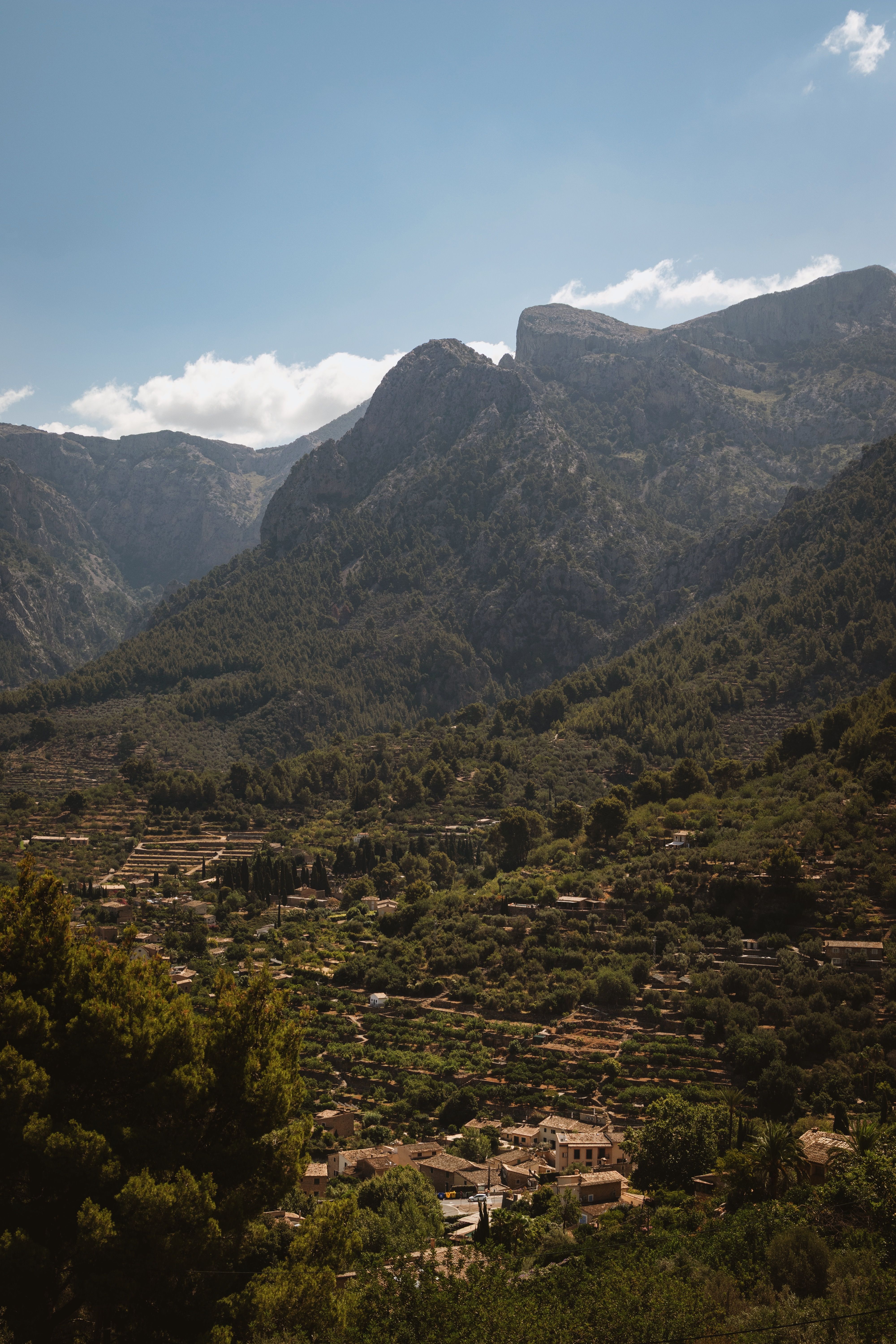
After centuries of Byzantine and Vandal rule, the Moors arrived in 902, renaming the island Mayūrqa and staying for three centuries. They built an advanced irrigation system in the Tramuntana mountains that still waters the terraced orange groves around Sóller today, and laid the foundations of what is now Palma's old town — a maze of narrow streets that still follows the original Arab city plan.
The conquest of 1229
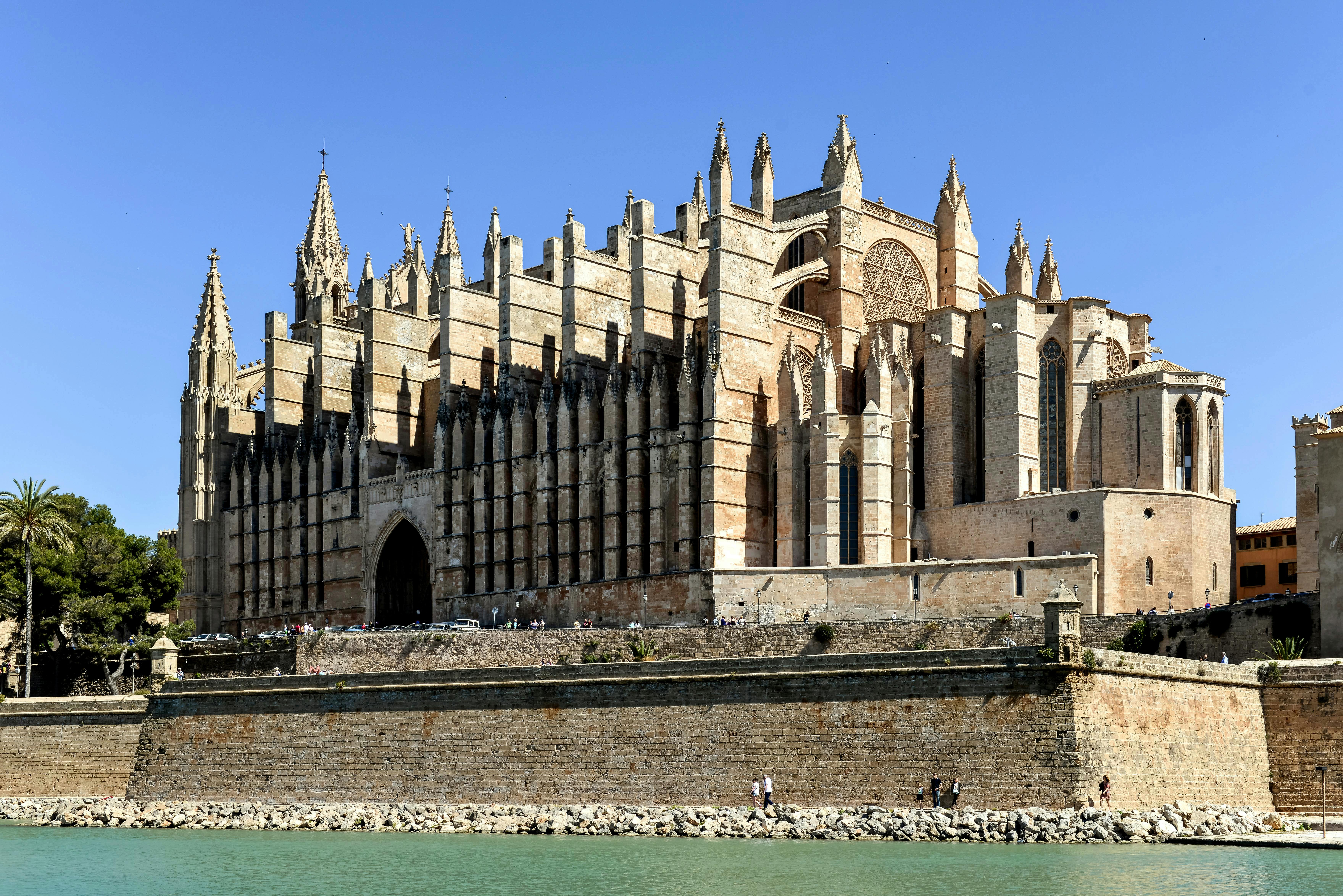
King Jaume I of Aragón landed with a fleet at Santa Ponça in 1229 and retook the island from the Moors after a siege of Palma that lasted months. That conquest marks the start of today's Mallorca: Jaume I rebuilt the city, laid the foundation of what is now La Seu cathedral — built on the site of the main mosque — and divided the land among his Catalan and Aragonese knights, which explains why Mallorquín, the local language, sits so close to Catalan.
La Seu itself took more than four hundred years to build, with a Gothic rose window nearly eleven metres across — one of the largest in the world — and an interior the Catalan architect Antoni Gaudí worked on in the early twentieth century. The cathedral's silhouette against the bay of Palma, especially at sunset seen from the sea, is the image most people associate with the island.
The winter that nearly killed Chopin
In the winter of 1838-39, French writer George Sand travelled to the Carthusian monastery of Valldemossa with her lover, composer Frédéric Chopin, who was already ill with what looked at the time like tuberculosis. They hoped for a mild Mediterranean climate; instead they found one of the wettest, coldest winters in years, heating that barely worked, and villagers who — fearing contagion — kept their distance. Chopin nonetheless wrote some of his most famous preludes there, and Sand later described the experience mercilessly in her book Un hiver à Majorque — one of the first texts to put the island on the international map, though hardly a glowing review.
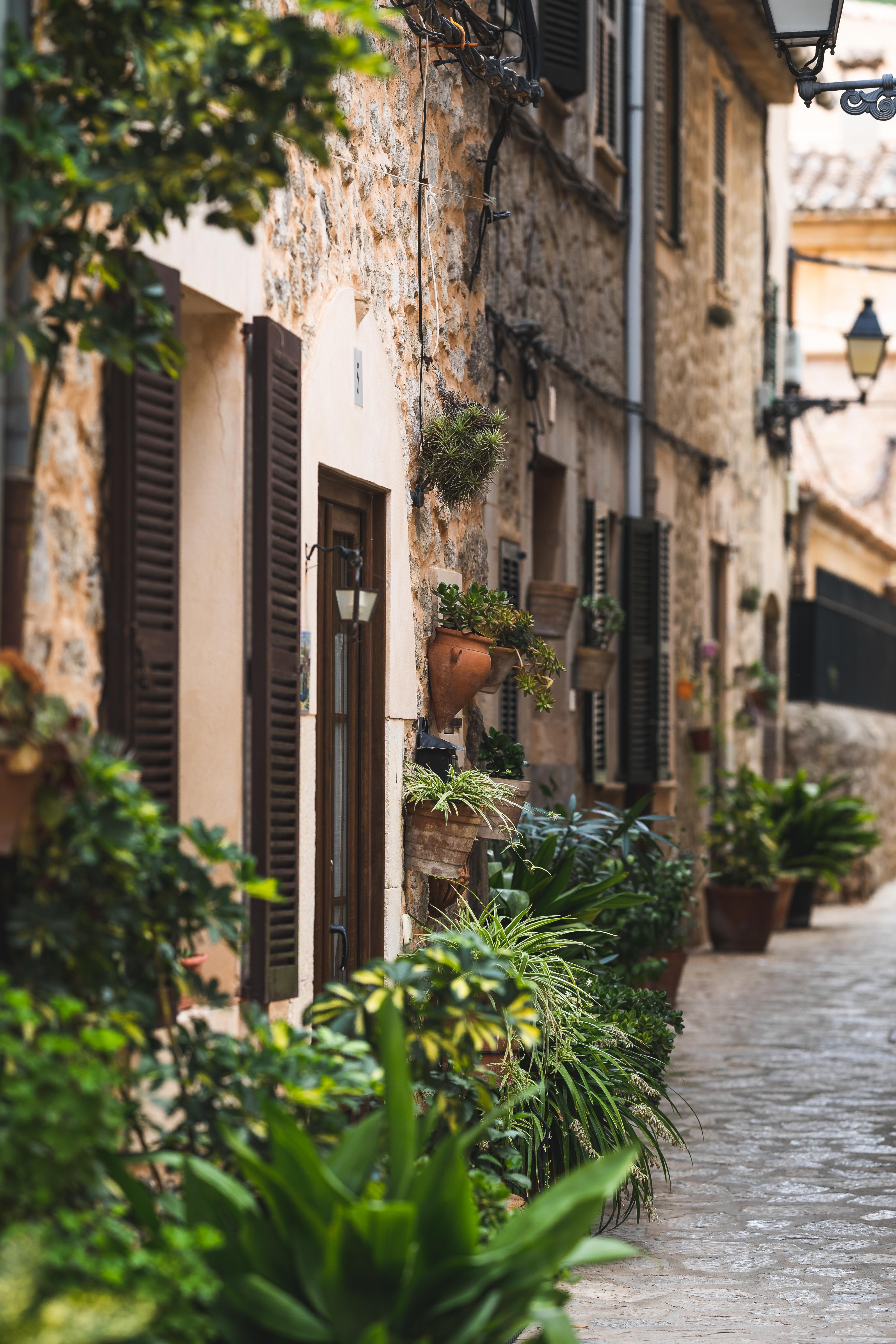
Today the cell where the couple stayed is a museum, with Chopin's original piano and manuscripts, and Valldemossa itself — with its steep streets of yellow sandstone — is considered one of the island's most beautiful villages, right in the heart of the Serra de Tramuntana.
The Serra de Tramuntana
The mountain range running along the island's entire northwest coast has been a UNESCO World Heritage Site since 2011 — not just for its scenery, but for its centuries-old cultural landscape: dry-stone terrace walls, an irrigation system of Arab origin, and villages like Deià, Fornalutx and Banyalbufar that seem barely to have adapted to modern times in centuries. Deià drew a colony of artists and writers in the twentieth century, with British poet Robert Graves as its best-known resident — his house is now a museum.
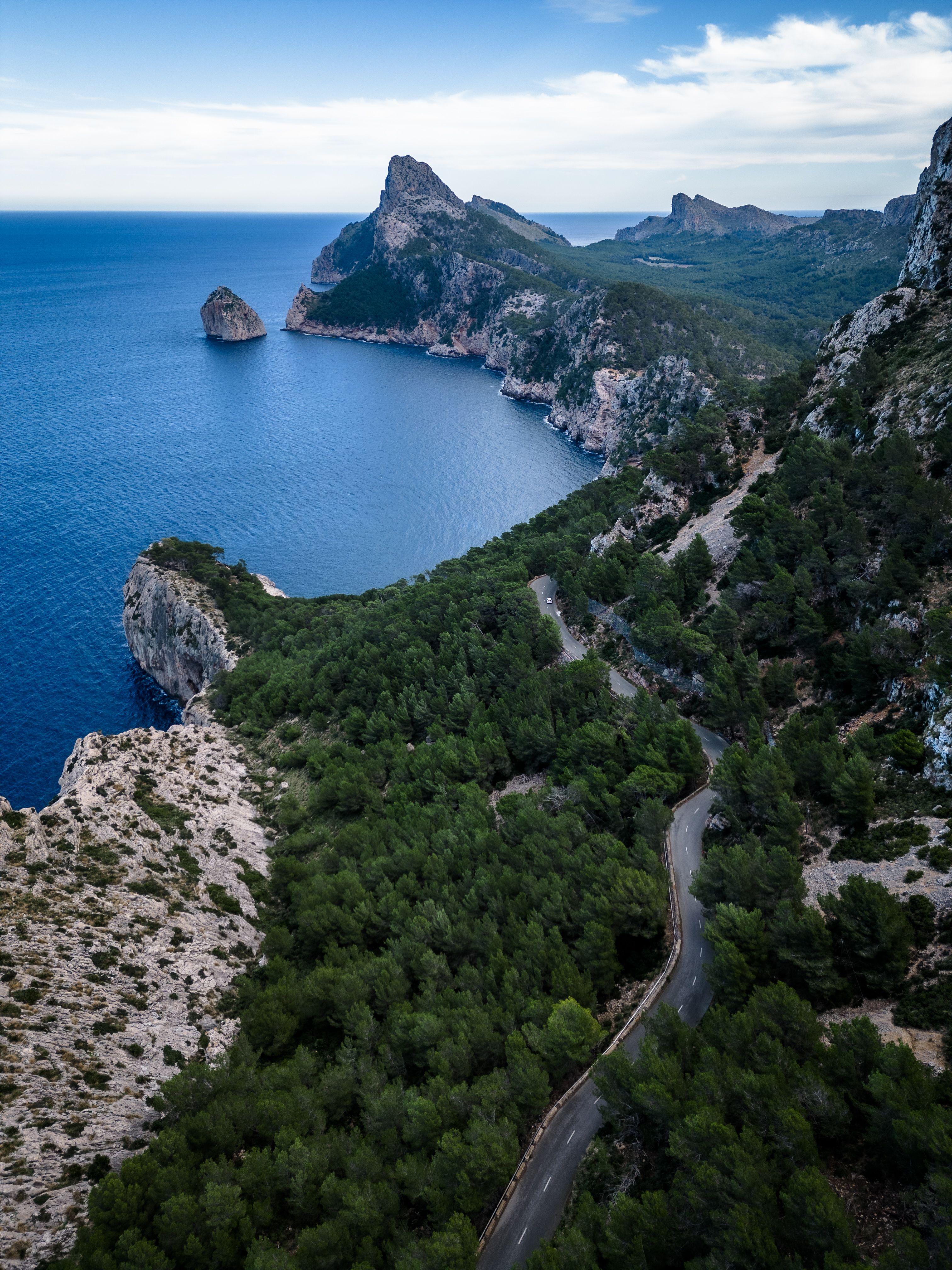
Hikers find the best terrain in the Balearics here: the cliffs at Sa Calobra, reached via a road with 26 hairpin bends often called one of Europe's most spectacular drives, or the walk to Cala Tuent, a remote cove reachable only on foot or by boat.
Pearls, caves and the east coast
Around Manacor, an artificial-pearl industry developed in the nineteenth century that still defines the town — factories there produce pearls from glass coated with fish-scale essence, a tradition unique to the island. Not far away lie the Coves del Drac, a cave system with one of the largest underground lakes in the world, where visitors have been rowed through since the early twentieth century during a classical concert played inside the cave.
The east coast around Porto Cristo and on to Capdepera and Cala Rajada offers a slower pace than the southwest — fishing harbours still in use, cliffs with views of Menorca on clear days, and Capdepera's castle, built in the fourteenth century against pirate raids.
Traditions that never faded
Every village on Mallorca still celebrates its own patron saint, but no festival is as beloved as Sant Antoni on 16 and 17 January, when bonfires (foguerons) are lit across the island and the dimonis — masked devil figures — dance through the streets, followed by the blessing of pets outside the church. In Palma itself, the Correfoc during the Sant Sebastià festivities in January draws thousands of spectators, with fireworks and fire-spitting demon figures walking literally through the crowd.
The siurell — a small, white ceramic whistle shaped like a figure, usually painted with red and green stripes — is also distinctly Mallorcan: a tradition dating back to the Moorish period that you'll still find at every market, made in the same workshops in Pòrtol as centuries ago.
What's worth seeing for yourself
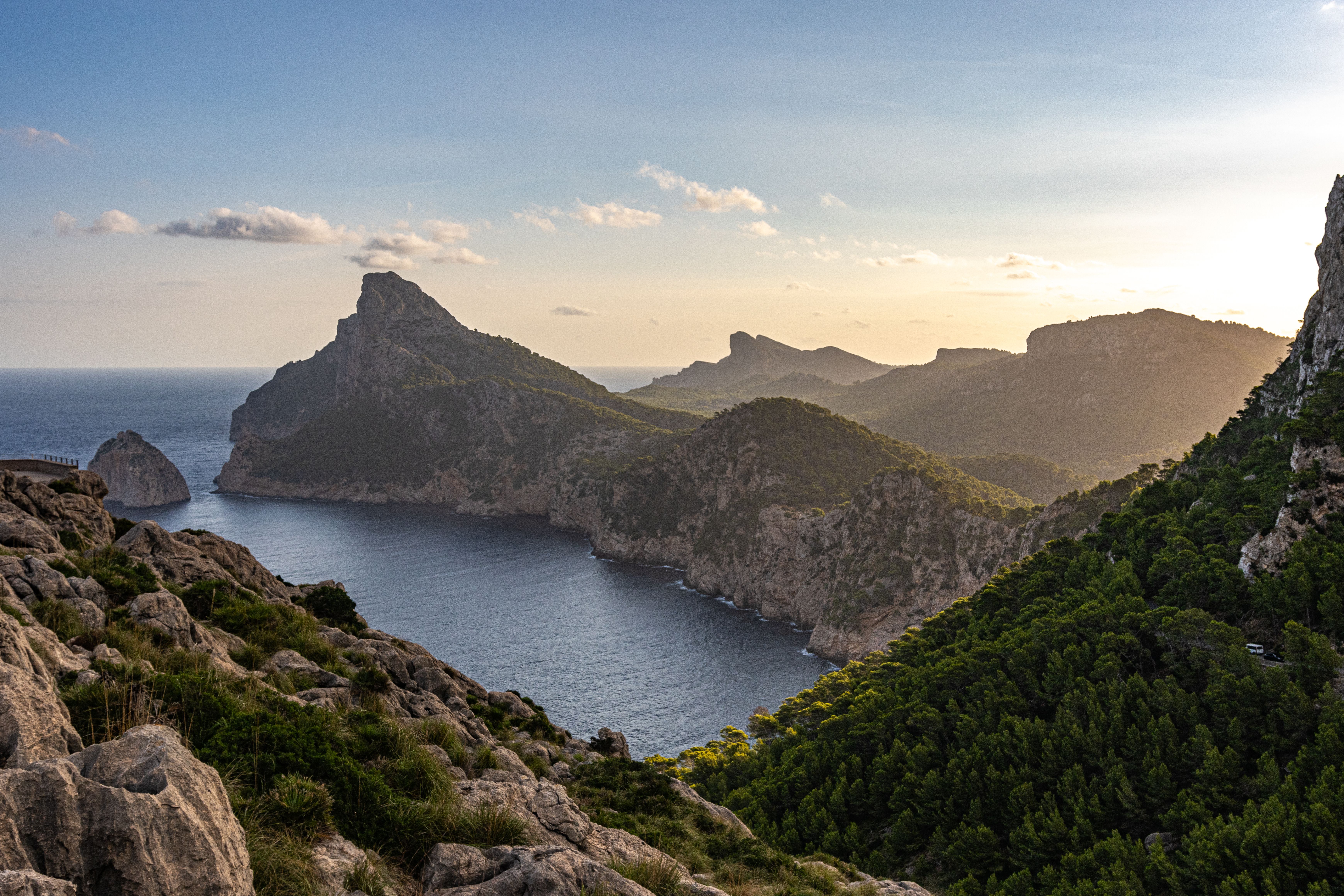
Drive to Cap de Formentor, the island's northernmost point, where a winding mountain road ends at a lighthouse with one of the most photographed views in the Mediterranean. Visit the Almudaina Palace next to the cathedral, once a Moorish fortress and still an official residence of the Spanish royal family. Walk through Palma's old Jewish quarter, the Call, with alleys dating back to medieval times. And if you have time to spare, take the historic wooden train from Palma to Sóller — more than a century old, running through tunnels in the Tramuntana into the heart of the orange valleys.
The other season: Mallorca without the crowds
From November to March, the island changes character entirely. Temperatures stay mild — often 14 to 17 degrees — plenty for long walks in the Tramuntana without the summer heat, and the roads to Sa Calobra and Cap de Formentor, jammed with rental cars in summer, sit nearly empty. It's also almond blossom season: from mid-January to early February, whole valleys around Sóller and inland turn white and pink, a natural spectacle that increasingly draws people to the island specifically to see it.
In the villages, ordinary life continues: Christmas markets on the squares of Palma and Pollença, the bonfires and dimonis of Sant Antoni in mid-January, and countryside restaurants switching to heartier winter dishes like sopes mallorquines (a thick vegetable soup with bread) and porc negre, the black Mallorcan pig. It's also the season when most house-buyers and long-term renters come to look around — without summer prices and without the crowds, you see exactly what Mallorca looks like all year round.